Crusading as a Form of Pilgrimage

Because some level of merit historically had been attached to Christian warfare under limited and less defined circumstances, it was not particularly hard for clerical promoters of the First Crusade to convince Christian knights that fighting in defense of fellow Christians on God’s behalf was a virtuous act. Indeed, as Riley-Smith has demonstrated, the charters of knights participating in the First Crusade sometimes explicitly referenced the desire to aid eastern Christians suffering under Islamic rule as one of their motivations for participating. A charter of two brothers, for example, written shortly before they embarked on the First Crusade, notes that they were going on the crusade, in part, “…to wipe out the defilement of the pagans and the immoderate madness through which innumerable Christians have already been oppressed, made captive and killed with barbaric fury.”[1] In this case, Muslims were depicted as barbarians without reason and self control, dominated by rage, which of course was in contrast to what clerics were now asking knights to do, namely refrain from indiscriminate violence as they put their military skills to use in defense of fellow Christians. Continue reading

Seven Myths of Native American History: An Interview with Professor Paul Jentz

I first met Professor Paul Jentz at the World History Association annual conference in Savannah, Georgia in 2015. Alfred J. Andrea and I were serving as co-series editors of the newly formed Myths of History Series for Hackett Publishing, and Al wanted us to meet as he had been very impressed with Paul in his previous dealings through the WHA and elsewhere. Paul had a unique charm and cerebral wittiness that made him every bit as likable as Al had suggested. More significantly, he understood and appreciated the goals of the Myths of History Series well, which focuses on producing works that dispel popular historical myths and are geared toward use in the college or university classroom.

After meeting and speaking with Paul in Savannah, we came away very impressed and, after some follow up emails, Paul submitted a book proposal that resulted in a book contract. Later in the process, as Paul began to submit chapters, we were especially happy with the quality and clarity of Paul’s writing. Indeed, as I read through the rough drafts of various chapters, I was, at times, finding myself dispelled of myths about Native American history that I had previously embraced on some level. Our appreciation for Paul’s work was confirmed when Hackett sent the manuscript to important outside readers, including Colin G. Calloway at Dartmouth College and Andrae Marak at Governors State University, who noted the following: Continue reading

Hackett Publishing’s Myths of History Series

The following clip is taken from a longer interview with Dr. David Sheffler covering a range of topics. This clip considers the genesis of the book Seven Myths of the Crusades, and the Hackett series that resulted from it.

The series has also seen the publication of Seven Myths of the Civil War by Professor Wesley Moody and Seven Myths of Africa in World History by Professor David Northrup. A fourth book, Seven Myths of Native American History, by Professor Paul Jentz, will be published in March, 2018.

Alfred J. Andrea and I (as series editors) encourage any teaching historians who have an idea for a new book in the series to contact us to discuss it. Please email me directly at aholt@fscj.edu or contact Hackett Publishing.

Alan V. Murray on Seven Myths of the Crusades

“There has long been a great need for a book like this one, and it deserves a wide dissemination among the interested reading public and journalists as well as students and professional historians….anyone intending to make judgmental pronouncements on the aims and character of crusading would do well to read it and reflect carefully before rushing into print.”
—Alan V. Murray, University of Leeds

Blogging as a Crusade Historian

Here is a brief clip (5:50) from my longer interview with Dr. David Sheffler that considers public engagement and commentary as a historian. It explains how I began to provide public commentary and the reason I began blogging. It also considers how social media is influencing the way many people view the past.

Studying History at the University of North Florida

The following five and a half minute clip is part of a longer interview I did with Dr. David Sheffler, Chair of the History Department at the University of North Florida. In this clip we discuss the excellent history program at UNF (which offers both Bachelors and Masters degrees in history ) and how well it prepared me for my later doctoral studies at the University of Florida.

I genuinely think that UNF’s history program offers a wonderful opportunity for students to study the past in an environment that both demands rigor and gives one the opportunity to interact with extraordinarily well qualified professors and historians. This clip briefly considers study abroad opportunities, preparation for doctoral programs, graduate teaching assistantships, and the educational background and qualifications of the professors.

The department is a real gem for those interested in studying history in north Florida.

Crusade Historians and Steven Runciman

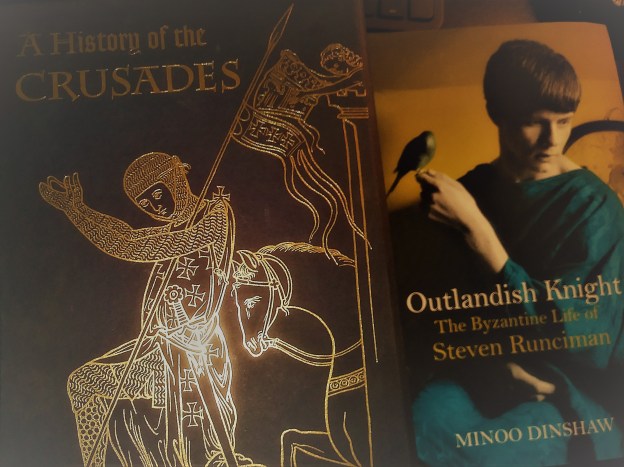
On the inside of the dustcover of his mammoth 768-page biography of the famed British historian Sir Steven Runciman, author Minoo Dinshaw notes:

“In his enormously long life, Steven Runciman managed not just to be a great historian of the Crusades and Byzantium, but Grand Orator of the Orthodox Church, a member of the Order of the Whirling Dervishes, [and] Greek Astronomer Royal and Laird of Eigg. His friendships, curiosities and intrigues entangled him in a huge array of different artistic movements, civil wars, Cold War betrayals and, above all, the rediscovery of the history of the Eastern Mediterranean. He was as happy living in a remote part of the Inner Hebrides as in the heart of Istanbul. He was obsessed with historical truth, but also with tarot, second sight, ghosts, and the uncanny.”

Continue reading

15 “Most Important” Books on the Crusades

The following list of books is based on a survey of 33 academic historians who were asked to provide an annotated list of what they saw as the ten “most important” books on the crusades. More information about the project can be seen here. Based on the same data, I also provide a ranking of the most influential historians based on how many mentions their books received from the historians, which can be viewed here. Continue reading

Reflections on the State of Medieval Studies: An Interview with Dr. Jane Chance

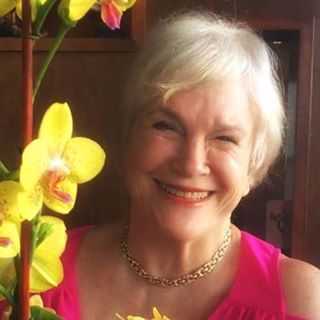
As a medievalist, I have long been familiar with the excellent reputation of the eminent scholar Jane Chance, the Andrew W. Mellon Distinguished Professor Emerita in English at Rice University and a recipient of an honorary doctorate of letters from Purdue University in 2013. Although I am a historian and her work is in the discipline of medieval literature, we medievalists are often (although not always) aware of the work of scholars in other disciplines. Yet Jane, in particular, is a powerhouse in the field, having authored twenty-three books and over one hundred articles and reviews on Old and Middle English literature, medieval women and gender, and medievalism. She has also received Guggenheim and NEH Fellowships, membership at the Institute for Advanced Study at Princeton, a Rockefeller Foundation Bellagio residency, and many book and article prizes for her various works.

In 2011 she began her well-earned retirement thirty-eight years after teaching her first English course at Rice University in 1973. Yet like many senior scholars, Jane saw her “retirement” as simply giving her more time to pursue her scholarship. Indeed, since her retirement she has produced four more books and served as a Visiting Scholar at the Institute for Medical Humanities at the University of Texas Medical Branch-Galveston. Very few scholars, even among the elite, could boast of such a successful career and speak with greater authority on the state of medieval studies.

Continue reading

Don’t Teach Osama bin Laden’s Version of History.

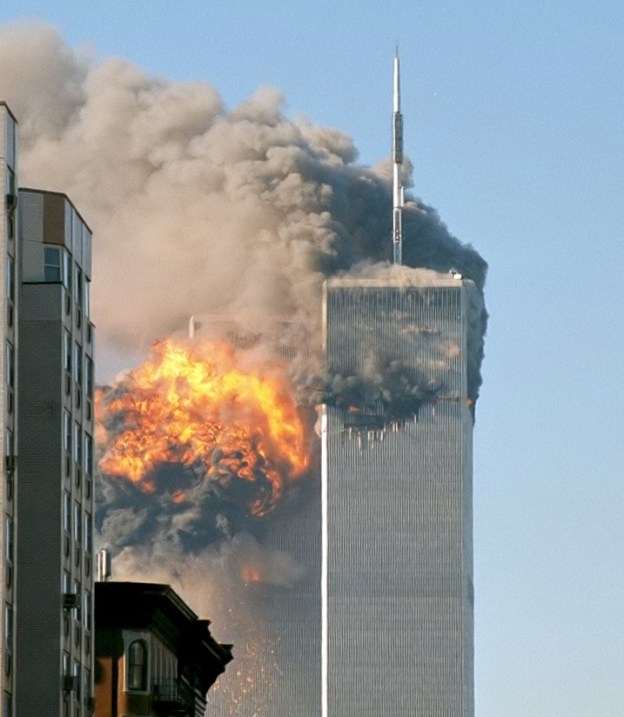
Above Image: The northeast face of World Trade Center (south tower) after being struck by a plane in the south face on September 11, 2001. Source: Wiki Creative Commons.

—————————

A number of medievalists and their followers are commenting in articles and on social media about the appropriation of the Middle Ages by modern white supremacists or “Nazis.” Indeed, a significant number of scholars in the literary camp of medieval studies have rallied around the notion that those teaching courses on the Middle Ages need to actively and urgently challenge such narratives in the classroom. This seems to be particularly the case with a popular academic website called In the Middle, where several medieval scholars write or comment on related issues. One recent essay by Dorothy Kim, Assistant Professor of English at Vassar College, was widely shared on social media and has firmly emphasized such a goal, claiming that “objectivist neutrality” by scholars teaching in academic disciplines that focus on the Middle Ages no longer works “because it facilitates white supremacists/white nationalists/KKK/Nazis and their horrific deployment of the Middle Ages.” Professor Kim issues both a wake up call and a rallying cry for scholars to pro-actively work against white supremacist narratives in the classroom, noting that because professors are authorities teaching medieval subjects they are, “in fact, ideological arms dealers.” Her essay expresses concern over the violence associated with white supremacy, historical linkages between white supremacy and academia, and the responsibility of scholars to clearly signal to their students that they themselves are not white supremacists or some of their students will “absolutely question” if they can “speak in your class with safety.” The full text of Professor Kim’s essay can be read hereContinue reading