Teaching Marines

I recently had one of the more rewarding teaching experiences of my career when I had the opportunity to present two lectures on the background of the so-called “Islamic State” to U.S. Marines from Company B, 4th Assault Amphibian Battalion. These were not just any Marines, mind you, but Marines from the reserve unit I once proudly served in as a sergeant. Continue reading

Africa, Islamic Terrorism, and the West: An Interview with Evans Gumbe

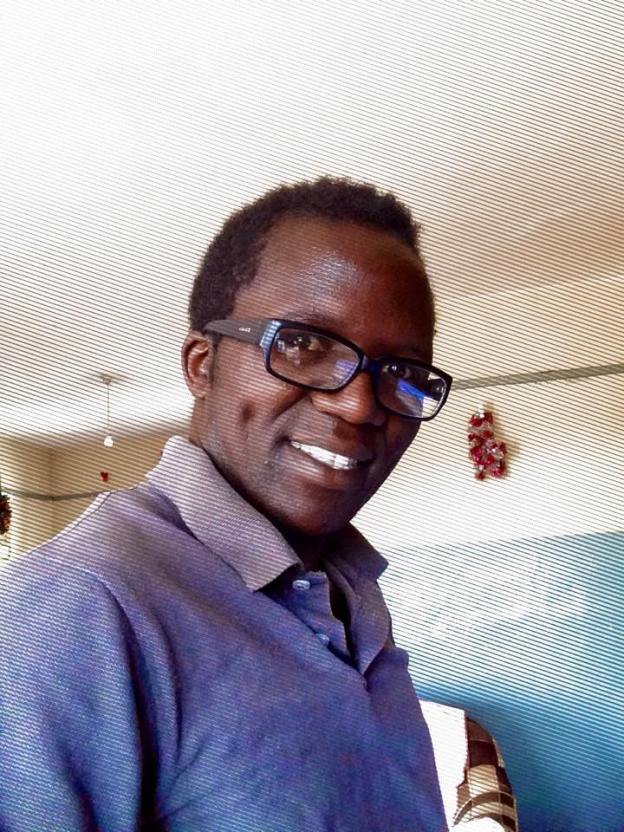
While focusing on terrorism and the rise of the “Islamic State” over the last 18 months, I have spent a lot of time talking with a variety of interesting people with unique perspectives on the issue, including academic, military, and law enforcement experts. Yet one of the more interesting people I have come across is Evans Gumbe, who is particularly noteworthy for his life experiences.

Evans is a budding scholar, fluent in English, German, Luo, Abagusii, and Kiswahili. He also has a basic knowledge of Spanish and French and his goal is to become a history professor. To this end, he has completed a M.A. in history from Egerton University in Kenya (2011) and then completed a second master’s degree in Leadership and Management (2014) at York St John University in England, where he also worked as a Researcher and teaching assistant. His research to this point focuses on ethnicity and sex and its role in the peace making process in Kenya. His most recent publication, reflecting these interests, is “The Role of Women in Inter ethnic Peace Building in South Nyanza, Kenya, 1850-2008,” in The International Journal of Humanities and Social Studies (2015). While at York, Evans met his German wife Johanna and in 2015 they moved to her home country where he is now enrolled as a Ph.D. student in history at Bielefeld University, Germany. By all appearances he will have a great career as an academic, but it is what he has lived through up to this point that provides his greatest insights. Continue reading

Right Wing Extremism vs. Islamic Extremism in the United States: A Look at the Numbers

Addendum- Special thanks to The College Fix for doing a story highlighting this blog post. Their story was reported on in a number of other publications, including the Wall Street Journal- See Notable & Quotable: Extremist Math.

———–

Recently I have noticed a lot of friends and associates posting articles on social media that claim right wing extremism is more dangerous than Islamic extremism. For many, the claim is surprising, so I thought I would take a look at the numbers to see if it is justifiable. At the outset, let me acknowledge that extremist attacks by any person on behalf of any political ideology are disturbing and must be examined and condemned. Yet it is such an important issue that an open and honest accounting of such claims is necessary.

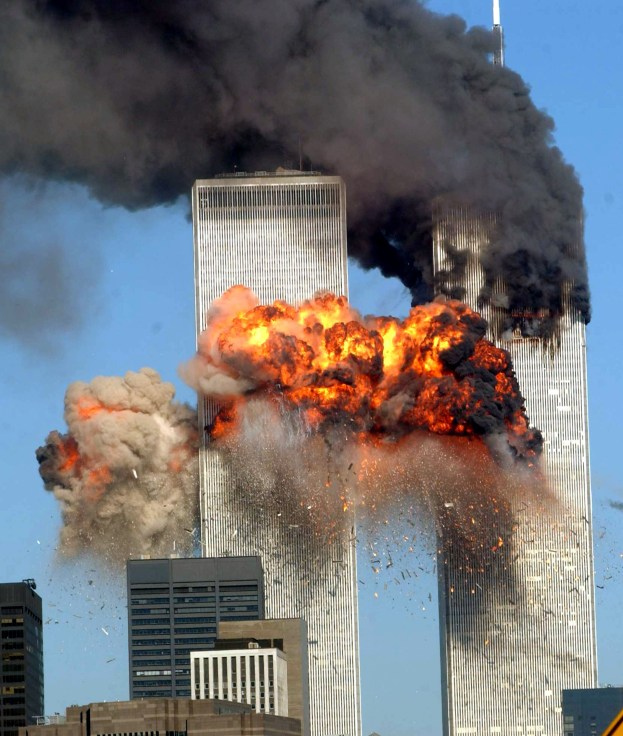
The now oft repeated claim that right wing extremism is more dangerous to Americans than Islamic extremism is based on total deaths and excludes casualties. Moreover, such accounts limit themselves to attacks in the United States (not worldwide), and purposefully exclude the nearly 3,000 deaths (as well as the over 6,000 survivors treated at hospitals) that took place on September 11, 2001. They don’t count the 9/11 deaths as then the numbers would be extraordinarily lopsided (in terms of total U.S. deaths due to Islamic extremism vs right wing extremism) and so such claims are careful to be based only on deaths in the United States AFTER the events of 9/11.

Indeed, if you include the death totals from 9/11 in such a calculation, then there have been around 62 people killed in the United States by Islamic extremists for every one American killed by a right wing terrorist (a 62 to 1 ratio if you divide the slightly over 3000 deaths due to Islamic extremism by the 48 deaths attributed to right wing extremism).

62 to 1. Continue reading

The Islamic State’s Moral Reasoning on the Sexual Enslavement of Yazidi Women and Girls

I’d recently viewed a widely circulating clip showing Al-Azhar Professor Suad Saleh arguing that, in a legitimate war between Muslims and their enemies, Muslims can capture slave girls and have sex with them. This is disheartening because Al-Azhar is a more than 1000 year old seat of learning and perhaps the most respected in the Sunni Muslim world. It’s a particularly touchy issue because of ISIS’ recent actions with regard to the Yazidi people. The video is from September 12, 2014, but has been circulating in social media in recent days. You can view it here: http://www.memri.org/clip/en/0/0/0/0/0/0/5252.htm

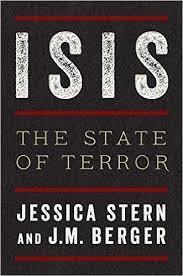
It made me think of a something I had recently read in the book by Jessica Stern and J.M. Berger, ISIS: The State of Terror (New York: Harper Collins, 2015) concerning the well-publicized success of the Islamic State in capturing and enslaving up to 7,000 Yazidi women.

isis

Stern (a lecturer on terrorism at Harvard University) and Berger (a non-resident fellow with the Brookings Institution) offer the following insight Continue reading

Top Ten Most Viewed Items for 2015

Looking for some interesting reading? You might try these essays and interviews, which were the ten most viewed items on apholt.com in 2015. It’s been a good year for this little blog.

10. An Interview with Dr. Florin Curta on Communism, Faith, and Academia.

An interview with my good friend, mentor, and one of the leading historians of the early Middle Ages on his life under communism in Romania and now as a leading American academic. This interview has staying power as it was originally the second most viewed item of 2014 and continues to be popular (with daily referrals from search engines) in 2015. Continue reading

The 99.9% Myth

A number of well-intentioned people, including President Barack Obama, have claimed that the Islamic State and other militant radical groups have practically no support among Muslims. Indeed, in a televised interview with CNN’s Fareed Zakaria, in response to a question of why his administration avoided using the phrase, “Islamic terrorists,” the president responded the vast overwhelming majority of Muslims reject radical interpretations of Islam, distinguishing between radical extremists and the remaining “99.9 percent of Muslims.”

I understand the desire to believe this and the optimism expressed in such a claim, but what is the evidence for it? Continue reading

A Troubling Analysis of the Recent Pew Poll on ISIS

ISIS is the largest terrorist organization in history, at one point seemingly controlling a land mass larger than Britain and ruling over a population of millions in parts of Syria and Iraq. Since ISIS first emerged on the international scene, with their invasion of Iraq last summer, their influence has only grown as they now have supporters and affiliates in several countries (e.g. Libya, Afghanistan, Nigeria, Egypt, etc…) who have declared their allegiance to ISIS’ self-proclaimed “caliphate” and wage war and commit acts of terror on their behalf.

wilayat-map-wilayat

Image: Map showing ISIS declared provinces from recent NYT article on the growth of ISIS.

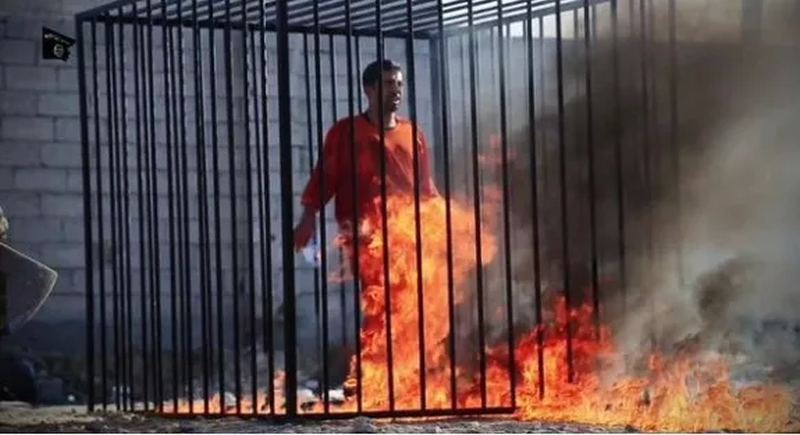
As an organization, they regularly commit extraordinary acts of violence. Recently, the U.S. Holocaust Memorial Museum found in a report that ISIS committed an act of genocide against the Yazidi people. Others have highlighted efforts by ISIS that have contributed to the extinction of Christianity in the Middle East. They have also, more than any other group, slaughtered enormous numbers of Muslims (primarily Shia) for not adhering to their particular view of Islamic orthodoxy. ISIS has also brought back institutionalized slavery at the quasi-state level, as they systematically enslave and rape captured female populations, with thousands of Yazidi women suffering this fate. By some estimates, as many as two to three thousand Yazidi women are still prisoners of ISIS. Add to all of this a long list of other abuses, including regularly throwing homosexuals off of rooftops as a form of execution, crucifixions of children, drowning of prisoners, burning prisoners alive, amputations, and of course beheadings, beheadings, beheadings, etc… all proudly recorded and posted online.

gayburning

drowningisis_christian_beheading

One might assume that such an organization would be universally condemned. Unfortunately, a recent Pew Poll shows otherwise. While the poll has been celebrated for showing how unpopular ISIS is in the Muslim world, and initially appears to show extraordinarily high “unfavorable” responses by participants when they were asked about ISIS, a closer look at the numbers really gives no reason for cheer and only feeds my pessimism. In a survey of ten Muslim majority countries, the Pew Poll reveals that ISIS has, in actuality, troublingly high numbers of support. Continue reading

Seven Myths of the Crusades: An Interview

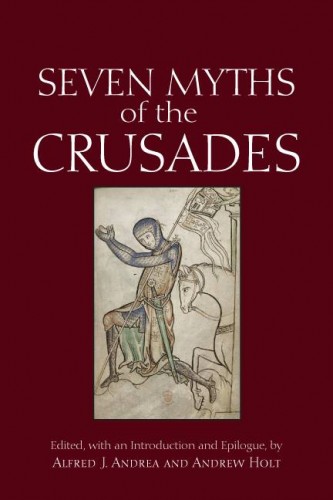
Alfred J. Andrea and I recently had the opportunity to do an interview with Medievalists.net focusing on our recent book Seven Myths of the Crusades (Hackett Publishing, 2015). The book has been well received so far, with a number of nice endorsements from leading crusade historians (which can be viewed here).

Medievalists.net provided some excellent questions that allowed Al and I to provide some in depth responses considering a number of important issues.

One of the questions asked why we chose to write the book. My partial response is below.

“I do want to address your question, however, as to why we wanted to create another book on the crusades, specifically taking the approach of countering modern popular crusade myths. We and the contributors all agreed that the prevalence of the myths that we address in this book are repeated so regularly in all media, especially popular films and literature, as well as in political speeches and commentary, that it was worthwhile to pull together a book, written and edited by scholars, that targets general readers and undergraduates. The goal is to explain to the reader why scholars tend to see the issues covered in the chapters quite differently than popular accounts often suggest. We wanted to give readers a sense of the complexity of each of the historical issues dealt within the chapters and why historians often disagree with common popular, often unnuanced interpretations of historical events. It is a topic that crusade historians discuss among themselves quite often, occasionally publishing articles in popular publications and on the web to make such a point to just such an audience. So the essays we have collected here do not represent new or cutting-edge scholarship. Rather, our goal is to communicate current scholarship to undergraduates and a general reading public. Moreover, we want to make that scholarship accessible, affordable, and engaging in a way that many academic books are not.”

Please read the full interview here.

Professor Thomas Madden on the First Crusade, Jerusalem, and the “Rivers of Blood”

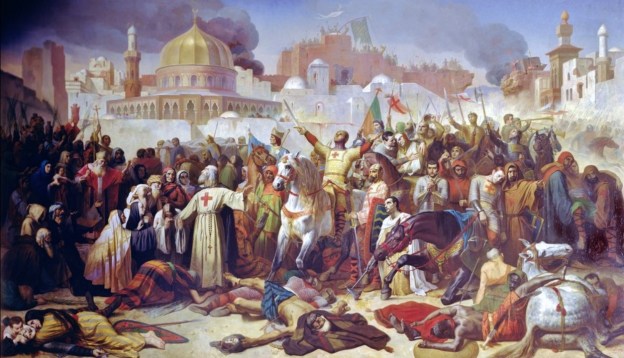
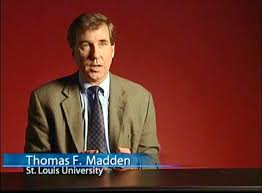
In his entertaining 2012 essay for Revista Chilena de Estudios Medievales, St. Louis University Professor Thomas Madden, perhaps the leading U.S. historian of the crusades, considers the widely repeated claim that the crusaders waded in blood up to their ankles or knees during their violent conquest of Jerusalem in 1099.

madden

Madden first considers how widespread this claim is, even citing its use in a speech by former U.S. President Bill Clinton, before subjecting it to careful analysis. He describes his reasons for pursuing the issue carefully, noting, to his his surprise, that even other crusade historians have embraced the claim. He writes:

“”In November 2008, Jay Rubenstein of the University of Tennessee gave a lecture for the Crusades Studies Forum at Saint Louis University. The title of the lecture was “The First Crusade and the End of the World”. In the questions that followed Rubenstein spoke of the crusaders in 1099 wading through the blood of their victims. I quickly pointed out that those reports were, of course, not meant to be taken literally. To my surprise, Rubenstein responded that he believed that they should be. He related his own experience witnessing a murder victim on a street in New York City and expressed his astonishment at the amount of blood that just one human body really contains. Since I have not witnessed a murder victim, I yielded the point. But the exchange has led me to take up the question of the massacre of 1099 and look more closely at common assumptions both in the general public and among crusade specialists…

Then Madden made an interesting point.

“Surprisingly, with all of this discussion of rivers, streams, or pools of blood, no one has ever attempted to discern whether such things are within the realm of physical possibility. Although we are dealing with an episode of bloody horror, we are also dealing with basic measurements that can be evaluated…” Continue reading

Studying Medieval History and Fighting ISIS?

Republican presidential candidate Carly Fiorina recently announced that her study of medieval history as an undergraduate at Stanford University in the mid-1970s would aid her as a future commander-in-chief in the war against ISIS.

http://www.thedailybeast.com/cheats/2015/10/05/fiorina-my-degree-will-help-fight-isis.html?source=TDB&via=FB_Page

She reasoned that ISIS is essentially medieval, seeking to drag the people and societies it controls back to the Middle Ages before listing a number of atrocities carried out by the group including burning prisoners to death, crucifixions, and beheadings. Because she associated these actions exclusively with the Middle Ages, she argued her education in medieval history would serve her well in dealing with these problems.

Is she right?

Medieval historians, like myself, tend to cringe when they hear modern commentators refer to something particularly brutal as uniquely medieval, as if brutality defined the Middle Ages in contrast to an enlightened and more gentle modern world. The reality is that medieval barbarism, as bad as it could be at times, often pales in comparison to the horrors of the technologically advanced 20th century, which include over sixty million people killed in World War II, the first use of Atomic Weapons, tens of millions killed under communist regimes, and the Holocaust.

Yet, as recently pointed out in a much discussed piece by Graeme Wood for The Atlantic, to dismiss any connection between ISIS and medieval history would be wrong. The self-declared “Caliphate” created by ISIS claims its legitimacy, and authority, is demonstrated in its adherence to the earliest Islamic principles as reflected in the life and examples of the Prophet Muhammad and its strict adherence to the Qur’an. Muhammad’s time as a religious leader and the emergence of the Qur’an came during the seventh century, which is about as medieval as one can get.

The leaders of ISIS often point to medieval historical examples and religious texts to cite precedents that they argue justify their own extreme actions. In light of this, Fiorina is correct in the sense that a western leader well educated on early/medieval Islamic history could have a better understanding of how ISIS and their supporters interpret their actions, motivate their followers, and justify their actions.

The problem is that I have no idea how much knowledge of medieval history Fiorina picked up as an undergraduate at Stanford and has retained since then. I doubt that, as a busy CEO and businesswoman, she has had much time or interest in keeping up with medieval scholarship over the past few decades. Yet her broader point, that knowledge of the Middle Ages can be helpful for modern leaders facing some of our current challenges, is valid.

One well versed in medieval history is presumably more aware of historical understandings of the life and example of the prophet Muhammad (which still influences the actions of many Muslims today), the emergence and background of medieval religious texts like the Qur’an, the basis for the Sunni-Shia split (contributing to extensive conflict within the Muslim world even today), the historical treatment of non-Muslims in Muslim ruled lands (a pressing issue at the moment as we have recently seen step declines in Middle Eastern Christianity), the causes and consequences of the crusades (whose interpretation remains a hot button issue among many today), etc…

Fiorina’s suggestion that her study of medieval history is valuable for understanding events in the present has been mocked, but one could certainly do worse than to have a solid understanding of the medieval past as a base from which they consider some of the issues we face in our presumably “clash of civilizations” modern world.

*Updated on 10/8. ———————————–

*A 350 word version of this essay was published as a “Lead Letter” in the Florida Times Union on 10/9/2015. See http://jacksonville.com/opinion/letters-readers/2015-10-09/story/lead-letter-fiorina-has-point-suggesting-history-background

——————

Below are some additional thoughts of mine on a Facebook post (10/7/2015) on a thread by Paul Halsall linking to a recent essay by David Perry for The Guardian (Available at: http://www.theguardian.com/commentisfree/2015/oct/06/carly-fiorina-medieval-history-degree-fight-isis?CMP=share_btn_fb )

My comments follow:—————

I’m not entirely sure of one of David’s points. While I respect David as a thinker and writer, he seems to be hedging his bets in this piece a bit.

In one place, at least, he seems to be mocking Fiorina’s suggestion that a degree in medieval history is useful for a political leader dealing with modern problems involving the Islamic world. He writes:

“She really does seem to be claiming that her undergraduate degree [in medieval history] will enable her to make sound foreign policy decisions…”

But elsewhere he writes:

“the Middle Ages do in fact shape contemporary events all the time…”

And…

“I believe that we need to study the past in order to respond to the present…”

Based on these last two comments David clearly see’s value in studying medieval history to “respond to the present.” So in that sense, at least, he agrees with Fiorina’s larger point, even if he does not like doing so.

Let me get into the weeds a little bit here. As you all know, ISIS bases its ideology on how it interprets medieval events and medieval texts. Particularly the life and example of the Prophet Muhammad in the seventh century (which they cite all the time to justify their actions- e.g. “Muhammad burned apostates according to the Hadith so it’s okay for ISIS to do it.”) and the Qur’an and other texts that emerged around this time. Understanding that, to some degree, is unquestionably a huge plus for any political leader. In fact, in an ideal world, I would wish all western generals and politicians who involve themselves in Middle Eastern affairs had a solid grounding in a number of medieval topics (e.g. the rise of Islam, the evolution of Islamic beliefs and texts, etc…). Even if ISIS is somehow interpreting those medieval events and texts incorrectly, then one needs an education in medieval history to know the difference and be able to argue the point.

Also, there are so many other ways an education in medieval history can help one better understand events in the present. One of the reasons I have been called on so much by local media to comments on ISIS and events in the Middle East is because such media often has very basic questions on topics like the origins of Shia-Sunni animosity, which is rooted in the Middle Ages, or questions about crusading rhetoric often used on both sides in modern clashes between Islamists and westerners, the historic treatment of non-Muslims under Muslim rule, or many other topics. Nobody else [or at least very few] at my college really has the background in those areas (e.g. early Islam, the crusades, etc…) that I as a medieval historian have. That became a base from which I have come to analyze events in the M.E. over the past 15 months or so, doing no less than 32 interviews with local media. So I certainly know from personal experience that having a background in medieval history can help one better understand (than many people without such an education) at least some of the complexities of current events in a way that engineering or accounting majors, for example, will not understand. I admit that knowledge of medieval history alone was not enough to provide coherent commentary on current events, but it was undoubtedly a solid base from which to engage in additional studies over the past 15 months.

So on this very basic point, that a background in medieval history is useful for a leader dealing with modern relations between the west and the Islamic world, Fiorina is obviously right.

Now, whether or not Fiorina actually remembers anything about the Middle Ages from her studies at Stanford back in the 70s, or her study of the Middle Ages involved any significant focus on Islam or related topics, is entirely another topic and fair game. I doubt as a business woman and CEO she bothered to keep up with recent medieval scholarship over the past 40 years since she graduated and I have no doubt that like a good politician she is touting her degree in the most opportunist of ways. But nevertheless I don’t like seeing some commentators (not referring to David here) dismiss the value of medieval history with regard to understanding current events. Diss Fiorina all you want and question her motives, but not the value of studying the medieval past for a greater grasp of events in the present. On that point she is right, even if she is only saying it to score political points rather than maintaining any real devotion to understanding the Middle Ages.
Continue reading