Tag Archives: Hackett Publishing

Seven Myths of the Spanish Inquisition: An Interview with Dr. Gretchen Starr-LeBeau

As editors for Hackett Publishing’s Myths of History Series, Alfred J. Andrea and I were quite pleased to have recruited scholar Gretchen Starr-Lebeau to write Seven Myths of the Spanish Inquisition (2023) for the series. Like all of the historical topics covered in the series, many popular myths about the Spanish Inquisition are emphasized in modern literature, film, and the broader popular culture, and have become so imbued in the public consciousness that the efforts of professors to push back against them can seem almost futile. This is why Al and I, as series editors, emphasized the importance of recruiting major scholars, with impeccable credentials, and experienced teachers, with the ability to communicate well with students and general readers, as authors or editors of books in our series. It is for this reason that Al and I were so pleased to have Gretchen, a respected scholar with considerable experience in the college classroom, agree to tackle the challenging topic of the Spanish Inquisition.

Continue reading

The Myth of Religion as the Cause of Most Wars

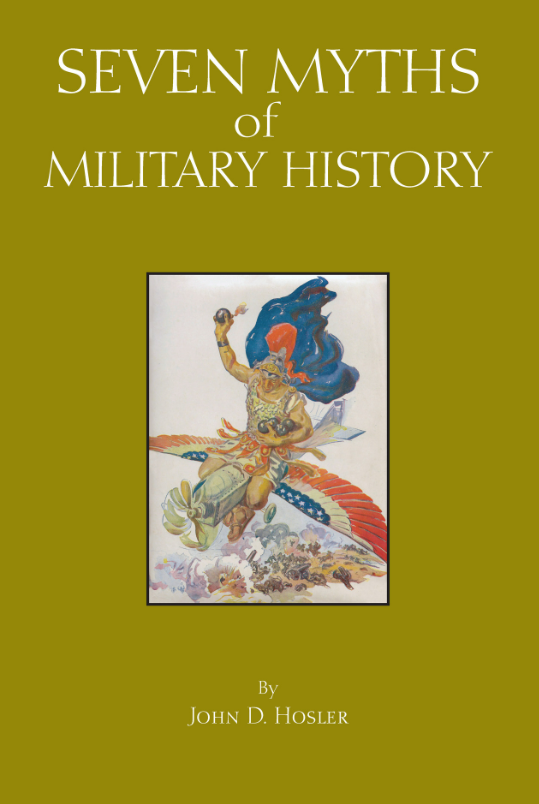
The following essay, by Andrew Holt, is republished from John D. Hosler‘s edited volume, Seven Myths of Military History (Hackett, 2022). It is provided here with both the permission of Professor Hosler and Hackett Publishing. Thoughtful feedback and comments are welcome and can be emailed directly to the author at aholt@fscj.edu.

———————-

Chapter 1. War and the Divine: Is Religion the Cause of Most Wars?

Andrew Holt

“It is somewhat trite, but nevertheless sadly true, to say that more wars have been waged, more people killed, and these days more evil perpetrated in the name of religion than by any other institutional force in human history.”

—Richard Kimball[1]

To uproarious laughter, the late comedian and social critic George Carlin once condemned God as the cause of the “bloodiest and most brutal wars” ever fought, which were “all based on religious hatred.” He stated that millions have died simply because “God told” Hindus, Muslims, Jews, and Christians it would be a “good idea” for them to kill each other. Carlin’s comedy routine, entitled “Kill for God!” has received rave reviews by its viewers for being “brilliant” and “spot on,” with one anonymous fan confirming that religion is “by far the single biggest cause of human deaths.”[2]

To be clear, it is not modern military historians who claim religion is the cause of most wars, but rather many prominent intellectuals, scientists, academics, and politicians, often with far greater influence over popular cultural assumptions than professional historians, who have popularized such claims. In a 2006 interview, the neuroscientist and cultural commentator Sam Harris stated, “If I could wave a magic wand and get rid of either rape or religion, I would not hesitate to get rid of religion. I think more people are dying as a result of our religious myths than as a result of any other ideology.”[3] The Oxford University evolutionary biologist Richard Dawkins claimed in 2003 that religion is the “principal label, and the most dangerous one,” by which human divisions occur, contributing to “wars, murders and terrorist attacks.”[4]

Continue reading

Guest Essay: The Story Behind the Making of Sanctified Violence: Holy War in World History by Alfred J. Andrea

The following essay is by Alfred J. Andrea, the former president of the World History Association, a mentor, and a noted medieval historian. In it, he provides background on how our forthcoming book Sanctified Violence: Holy War in World History, was envisioned and came together.

——————–

Religion is a shield against life’s assaults. But it is also a “terrible swift sword” unsheathed against the perceived enemies of divine righteousness. As a student of religious history, I have long been fascinated with the dual faces of devotion, especially religion’s sanctification of violence, but for many years did not expand my investigation of holy war beyond the boundaries of Christianity and Islam. That changed abruptly in 2003, while offering a seminar on the crusades at the Global History Center in Beijing. Discussion of Portuguese and Spanish crusades in the Indian Ocean and the Americas prompted a student, who was pursuing a PhD in global history, to ask if there are forms of holy war other than crusades and jihads that a world historian should be aware of. I was momentarily stumped, but promised a reply the next day.

Continue reading

Joan of Arc’s Holy War

Above Image: Dante Gabriel Rossetti (1828-82)- Jehane le Pucelle. Source: Wikimedia

The following selection of text was cut from an early draft of Chapter 3, “Holy Wars in Defense of the Sacred,” in the forthcoming book (expected March 2021) Sanctified Violence: Holy War in World History. Rather than discarding it, the authors, Alfred J. Andrea, emeritus professor of history at the University of Vermont, and Andrew Holt, professor of history at Florida State College at Jacksonville, wanted to make it available here. The book, aimed primarily at a student readership, explores the various types of wars waged in the name of religion that have occurred around the world over the past 5,000 years. It will be offered by Hackett Publishing as part of their Critical Themes in World History Series. Please see more information about the project below.

Continue reading

Accounts of the Mongols in The Medieval Record

Hackett Publishing has kindly given permission to reproduce the following source selections from my friend and senior colleague Alfred J. Andrea’s excellent sourcebook, The Medieval Record: Sources of Medieval History (Second Revised Edition). This more than 500-page book contains numerous important sources from Ancient Rome to the discovery of the New World, with many of them original translations by Professor Andrea. The sources provided here include:

Matthew Paris, The Greater Chronicle: An Entry for 1241

Ivo of Narbonne’s Confession

Matthew Paris’ Illustration of The Tartar Feast

Each of the sources offers fascinating insights into how European Christians during the thirteenth century understood the Mongols and the ferocity of their attacks on various peoples. The depictions are detailed, graphic, and fearful. Of special interest is the image of The Tartar Feast provided at the end of Ivo of Narbonne’s letter. Professor Andrea’s helpful introductory text and “Questions for Consideration” precede the sources immediately below: Continue reading

Buddhist Holy Warriors in Modern Tibet

While working on a book (Sanctified Violence: Holy War in World History) for Hackett Publishing that considers holy war in a broader world history context (co-authored with my friend and senior historian Alfred J. Andrea), I have spent the last year considering considering the various modes and types of holy war that have taken place within different faith traditions. Professor Andrea, as the former head of the World History Association and a leading world historian, has been a wonderful guide in directing me to important readings in areas beyond my normal research focus (Christian and Islamic holy war).

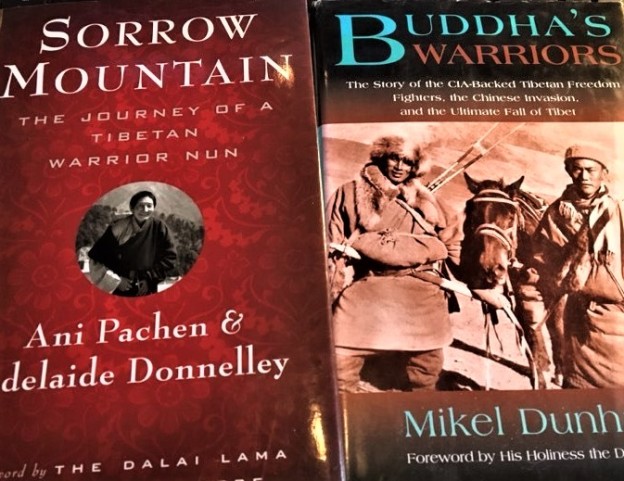
Two books I have read recently that may appeal to some of you who are interested in the broader topic of holy war are Sorrow Mountain: The Journey of a Tibetan Warrior Nun and Buddha’s Warriors: The Story of the CIA Backed Tibetan Freedom Fighters, the Chinese Invasion, and the Ultimate Fall of Tibet (both pictured above). Continue reading

More Myths of the Crusades: A Panel Discussion at Leeds in 2019.

I’d encourage any interested readers of this blog attending the International Medieval Congress at the University of Leeds in the summer of 2019 to consider attending the following round table discussion sponsored by the Northern Network for the Study of the Crusades.

More Myths of the Crusades: A Follow up to Seven Myths of the Crusade – A Round Table Discussion

The panel includes a range of junior and senior scholars who, as a follow up to the 2015 book Seven Myths of the Crusades, will be considering additional crusade myths.

The panelists include:

Among the topics that will be considered are the following: Continue reading

Seven Myths of Native American History: An Interview with Professor Paul Jentz

I first met Professor Paul Jentz at the World History Association annual conference in Savannah, Georgia in 2015. Alfred J. Andrea and I were serving as co-series editors of the newly formed Myths of History Series for Hackett Publishing, and Al wanted us to meet as he had been very impressed with Paul in his previous dealings through the WHA and elsewhere. Paul had a unique charm and cerebral wittiness that made him every bit as likable as Al had suggested. More significantly, he understood and appreciated the goals of the Myths of History Series well, which focuses on producing works that dispel popular historical myths and are geared toward use in the college or university classroom.

After meeting and speaking with Paul in Savannah, we came away very impressed and, after some follow up emails, Paul submitted a book proposal that resulted in a book contract. Later in the process, as Paul began to submit chapters, we were especially happy with the quality and clarity of Paul’s writing. Indeed, as I read through the rough drafts of various chapters, I was, at times, finding myself dispelled of myths about Native American history that I had previously embraced on some level. Our appreciation for Paul’s work was confirmed when Hackett sent the manuscript to important outside readers, including Colin G. Calloway at Dartmouth College and Andrae Marak at Governors State University, who noted the following: Continue reading

Hackett Publishing’s Myths of History Series

The following clip is taken from a longer interview with Dr. David Sheffler covering a range of topics. This clip considers the genesis of the book Seven Myths of the Crusades, and the Hackett series that resulted from it.

The series has also seen the publication of Seven Myths of the Civil War by Professor Wesley Moody and Seven Myths of Africa in World History by Professor David Northrup. A fourth book, Seven Myths of Native American History, by Professor Paul Jentz, will be published in March, 2018.

Alfred J. Andrea and I (as series editors) encourage any teaching historians who have an idea for a new book in the series to contact us to discuss it. Please email me directly at aholt@fscj.edu or contact Hackett Publishing.

Alan V. Murray on Seven Myths of the Crusades

“There has long been a great need for a book like this one, and it deserves a wide dissemination among the interested reading public and journalists as well as students and professional historians….anyone intending to make judgmental pronouncements on the aims and character of crusading would do well to read it and reflect carefully before rushing into print.”
—Alan V. Murray, University of Leeds

Interview with Dr. Wesley Moody on Seven Myths of the Civil War

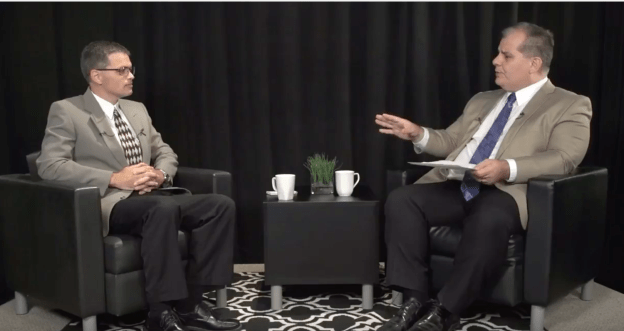
As seen in the video below, I recently had the chance to interview my colleague, Dr. Wesley Moody at Florida State College at Jacksonville, on the popular myths of the U.S. Civil War. Wes is an expert on the U.S. Civil War and has published his fourth book (forthcoming from Hackett Publishing) on the topic with a series I am co-editing with Dr. Alfred J. Andrea. The book includes the contributions of seven leading U.S. historians considering some of the most controversial issues related to U.S. Civil War history. We soberly discuss them here.

Special thanks to Professor Isaac Brown and his students at Florida State College at Jacksonville, particularly Lance Hunt, for their efforts in producing this. I hope we can make more of these on other key topics in the future.

“Readers of this book who thought they knew a lot about the U.S. Civil War will discover that much of what they ‘knew’ is wrong. For readers whose previous knowledge is sketchy but whose desire to learn is strong, the separation of myth from reality is an important step toward mastering the subject. The essays will generate lively discussion and new insights.”
—James M. McPherson, Professor Emeritus, Princeton University